


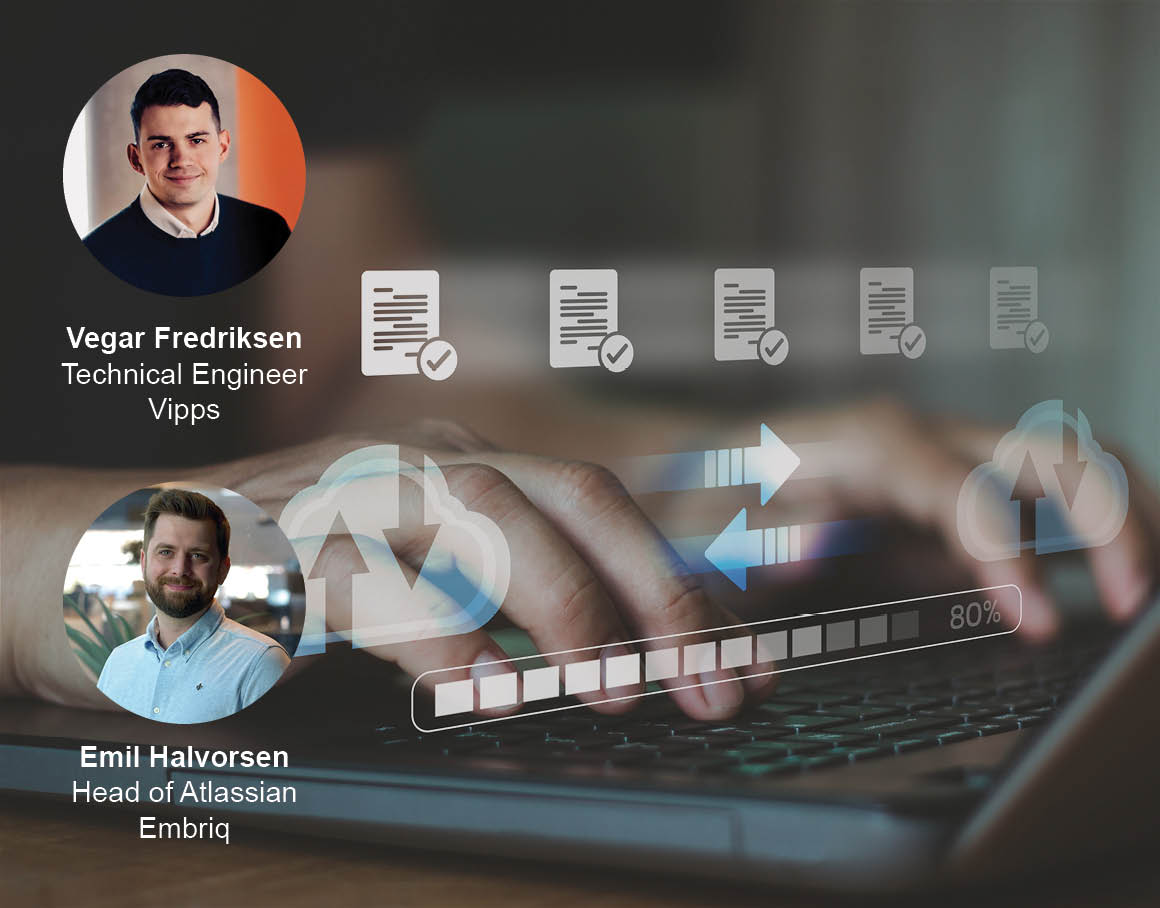
When Vipps decided to move from Atlassian Data Center to Atlassian Cloud, the initiative involved far more than a technical upgrade. The goal was to modernize the platform, reduce operational overhead, and create a stronger foundation for future growth.
“Our primary goals were to modernize the platform, move away from infrastructure management responsibilities, and improve scalability and availability. We also wanted faster access to Atlassian’s latest features and to provide users with a more modern and intuitive experience,” says Vegar Fredriksen, Technical Engineer at Vipps.

Vegar Fredriksen, Technical Engineer at Vipps
A Complex Journey That Required the Right Partner
The migration from an on-premises environment to the cloud quickly proved to be more than just a technical exercise. The project required careful consideration of organizational processes, workflows, and existing customizations.
“Migrating from Data Center to Cloud was a highly complex process, both technically and organizationally. For us, it was important to work with a partner that had done this before someone who could share best practices, help us avoid pitfalls, and support us when it really mattered.”
Fredriksen particularly highlights the value of having an advisor who could support the entire journey from early planning and preparation to migration execution and post-migration follow-up.
“Embriq was an excellent sparring partner throughout the process and played a key role in helping us complete the migration in a secure and successful way,” explains Fredriksen.
This strong collaboration between customer and partner became one of the project’s key success factors.
“Vipps is one of those customers that truly contributes to making a migration successful. They brought engaged resources, strong internal alignment, and a clear willingness to take ownership throughout the process. It’s rare to see a customer this proactive, and it clearly shows in the results. Successful collaboration is not only about technical expertise, it’s about both parties genuinely wanting to succeed together,” says Emil Halvorsen, Head of Atlassian at Embriq.

Emil Halvorsen, Head of Atlassian at Embriq
How Vipps Planned the Migration from Atlassian Data Center to Cloud
A successful migration begins long before the actual cutover. Vipps invested significant time in understanding its existing environment and preparing the organization for the transition.
“Thorough planning was critical. We spent a great deal of time mapping usage patterns, dependencies, integrations, and customizations. It was also important to conduct extensive testing and ensure clear communication across the organization,” says Fredriksen.
A clearly defined cutover plan and strong operational readiness during the migration itself were also essential to ensuring a controlled transition.
Close Collaboration and Clear Coordination Ensured a Smooth Migration
The migration was carried out through close collaboration between Vipps, Atlassian, and Embriq. Clearly defined responsibilities, strong coordination, and Embriq’s role as a bridge between Vipps and Atlassian were critical to the project’s success.
“We worked alongside a highly efficient Atlassian FastShift team and skilled consultants from Embriq. Even with an ambitious timeline and a significant workload, the migration went surprisingly smoothly, largely because everyone contributed and delivered within their area of responsibility,” says Fredriksen.
He also emphasizes the importance of strong teamwork throughout the project.
“We experienced firsthand how valuable close collaboration within the migration team really is.”
The strong communication and collaboration were equally noticeable from Embriq’s perspective.
“Good communication is often underestimated in projects like this. Vipps was clear about their needs, raised concerns early when something wasn’t right, and ensured that the right people were available whenever needed. It sounds simple, but it’s far from always the case. It makes a huge difference in what we’re able to deliver,” says Halvorsen.
Key Lessons Learned from the Atlassian Cloud Migration
The project also generated valuable insights that other organizations can learn from, particularly around preparation, testing, and managing the differences between platforms. One of the clearest lessons was the sheer scope of testing required.
“One key lesson is that you should test more than you think is necessary, especially when it comes to third-party apps, integrations, and automations.”
The transition from Data Center to Cloud also introduces changes that affect both functionality and user experience.
“At the same time, organizations should expect differences between Data Center and Cloud, both in terms of functionality and the user interface.”
Fredriksen also stresses the importance of starting early, especially since compliance processes and technical adjustments can take longer than expected.
“It’s important to start planning early and not underestimate the complexity. Compliance clarifications, particularly related to audit rights, took longer than expected and should be addressed early in the process,” explains Fredriksen.
The experiences from the project align closely with what Embriq often sees in similar migrations: the greatest value comes when the migration is used as an opportunity for improvement, not simply relocation.
“When we look back at projects like this, people rarely remember the migration itself. What they remember is how the platform felt afterward. Was it easier? Was it better? For Vipps, this wasn’t just about moving to the cloud, it was about using the opportunity to improve. That’s the right mindset,” continues Halvorsen.
Using the Migration as an Opportunity to Simplify and Improve
An important part of the project was not only moving the existing solution to the cloud, but also improving it along the way.
“We used the migration as an opportunity to clean up the environment. Over time, a large amount of historical data, old Jira projects, Confluence spaces, and outdated configurations had accumulated,” says Fredriksen.
In practice, this included:
- Removing outdated content and inactive projects
- Cleaning up structures and access management
- Simplifying configurations and customizations
- Reducing complexity in integrations and overall setup
- Gaining better visibility into usage and optimizing licensing needs
The result was not simply a migrated platform, but an improved one.
“By carrying out this cleanup beforehand, we achieved a simpler, more structured, and more efficient Cloud platform, both for end users and for those of us managing the solution,” explains Fredriksen.
The Results After Moving to Atlassian Cloud
Following the transition to Atlassian Cloud, Vipps has experienced several clear benefits.
“The biggest advantages are a more modern and intuitive user experience, along with faster access to new features and improvements. In addition, the need for operations and maintenance has been significantly reduced, and we are now better positioned to scale and further develop the platform moving forward,” says Fredriksen.
What to Know Before Migrating from Atlassian Data Center to Cloud
Based on their own experience, Fredriksen offers several clear recommendations for organizations considering a similar move:
- Start early and plan thoroughly
- Do not underestimate the complexity
- Allocate sufficient time for testing
- Ensure strong organizational alignment and communication
“Good organizational anchoring, clear communication, and sufficient time for testing are all critical factors for a successful migration.”
Cloud migration delivers significant benefits, but it also requires respect for the complexity involved. When done correctly, it creates a much stronger foundation for future growth and innovation.